Translational oncology
Clinical Translation & Immunotherapy Response
Correlative science for a national phase II trial testing whether reshaping the tumour microenvironment can make immunotherapy work in colorectal cancer.
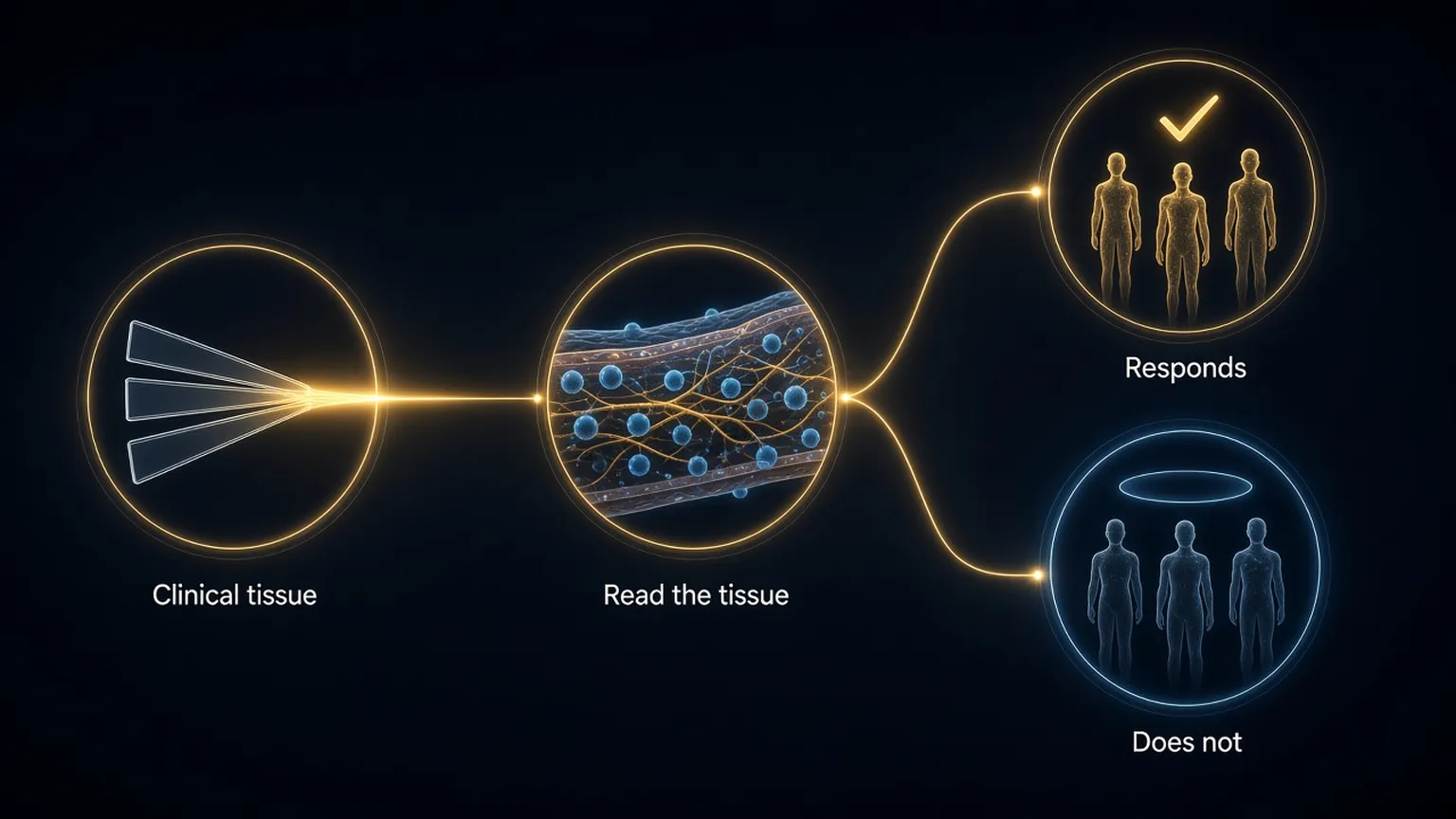
Immune checkpoint inhibitors have transformed some cancers and barely touched others. Microsatellite-stable colorectal cancer is one of the others: its microenvironment keeps immune cells out or switches them off. A national multi-site phase II trial asked whether modulating that environment, with a drug that targets cancer stemness given alongside anti-PD-1 immunotherapy, could reshape the immune landscape and open the tumour to attack.
I led the correlative science workstream. That meant designing tissue and blood collection across every participating site, acting as custodian of the trial’s samples, and building the analysis pipeline: multiplex imaging and spatial analysis of paired biopsies taken before and during treatment, linked to patient outcomes through ethics-approved data linkage and the trial’s statisticians. The pipeline answers two questions: whether the combination shifts immune infiltration and tissue architecture, and whether those shifts predict who benefits.
The strength here is translational infrastructure. Sample logistics, ethics, analysis, and outcome linkage were built to run identically at every site, so the biology can be read at trial scale.