Tumour immunology
Tumour Immunology & the Microenvironment
A conserved cytokine signal that marks tumours likely to resist immunotherapy, and a clinical route to test it.
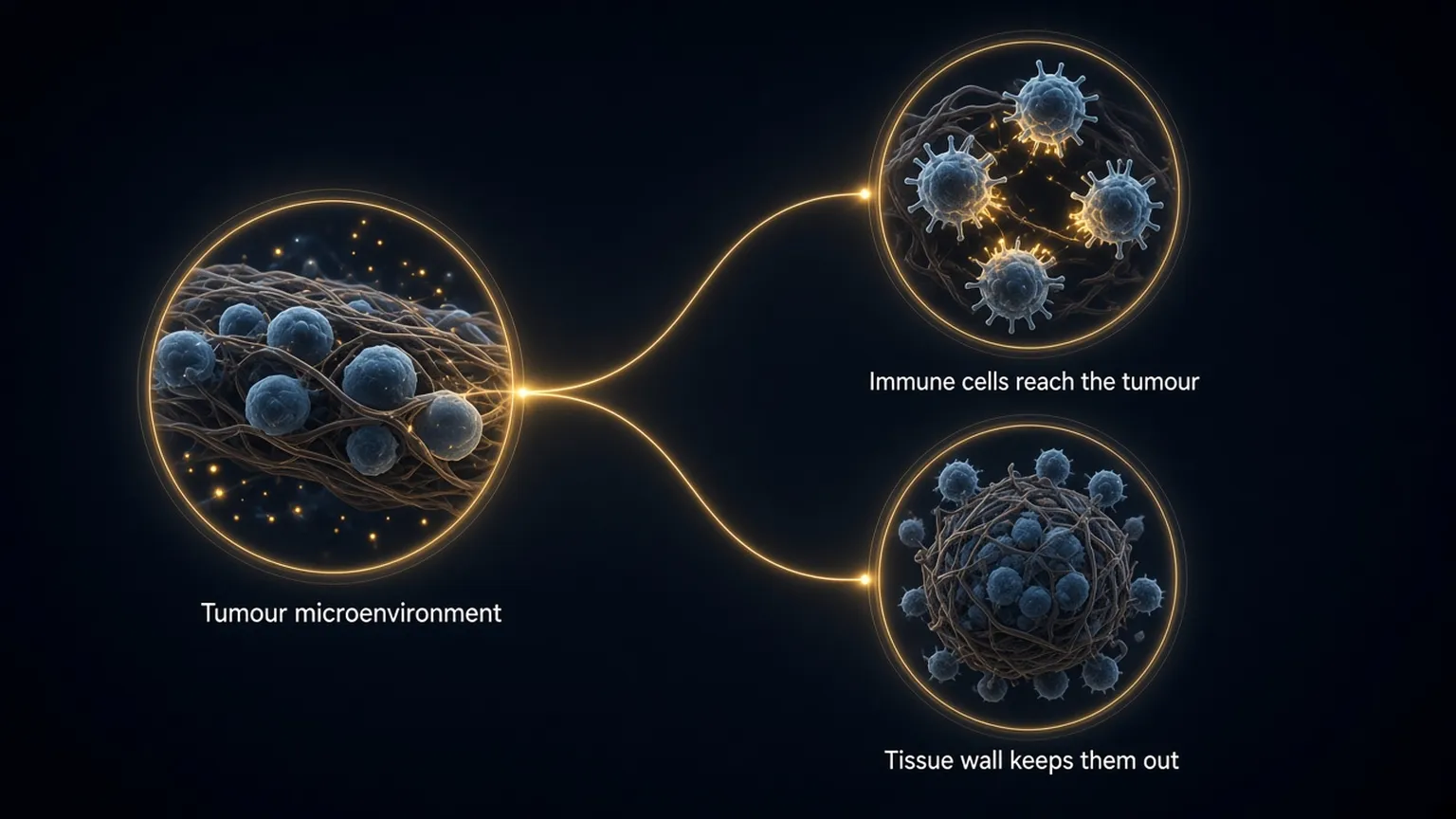
Cancer rarely acts alone. The stroma and immune cells around a tumour can support immune attack or shut it down, and inflammatory cytokine signalling is one of the main switches. My work asks which signals decide that outcome, and whether they can be read in patient tissue before treatment begins.
Working across cohorts and cancer types, we investigated how cytokine signalling between tumour cells and their neighbours shapes progression, metastasis, and response to immune checkpoint blockade. That work identified a conserved biomarker of the resistant state, one that holds across tumour types, and it points to an existing clinical drug that could be repurposed to test whether blocking the axis restores response. Two published studies underpin the approach: signalling between tumour sub-clones in inflammatory breast cancer (Cancers, 2022) and the way TP53 mutations rewire cytokine dependence in gastric cancer (Cell Reports, 2024).
The strength of the program is that it closes the loop: a mechanism defined in the laboratory, a measurable signal in patient tissue, and a therapeutic hypothesis that can be taken into the clinic.